

Yekaterinberg
In 1885, the American journalist George Kennan travelled to Russia to chronicle the Czar’s Siberian exile and prison system. Traveling with Kennan
was the newspaper artist George Frost, whose job was to illustrate Kennan’s articles. The two Americans traveled by train to the Russian city of Yekaterinberg where there was an eleven-foot high brick pillar that marked the end of European Russia and the beginning of Siberia. At the marker Kennan and Frost saw for the first time what Siberian exile meant for the Russian people. Bearded and gaunt after marching for more than five hundred miles in chains, the prisoners collapsed at the foot of the pillar and buried their faces in the dirt. Some hugged each other and said goodbye, knowing that very few exiles managed to return to European Russia when they had completed their sentences. Most likely they would never see their homes again.
Tyumen
Soon after, Kennan and Frost visited a prison in the Siberian town of Tyumen. The prison was overcrowded, and many prisoners slept in their chains. Indeed, many had been chained for years and were chained for their entire sentences. The smell from a tub of human excrement and urine overpowered the two men; the stench was maddening, “the stench of a disinterred grave”, wrote Kennan. He said it was like being caught in a hospital sewer pipe. When shown to a courtyard, the two men gulped the fresh air as though they had just escaped drowning.
Every year, at least seven hundred prisoners died of typhus in the Tyumen prison. The typhus bacteria spread easily through the fleas, bedbugs, and lice that thrived in the filth of the prisoners’ unwashed bodies.
A Perfect Hell
In visit after visit to prisons in the Czarist penal system, the situation was the same for all prisoners. Without exception, every prison had tubs filled with excrement and urine; every prison bred contagion; in every prison the prisoners lived in despair. “No other Russian institution of the 19th Century illustrates the inhumane treatment of the one million prisoners living in Siberia, a vast prison without a roof”, wrote Kennan.
The prisoners were the slave laborers who worked the mines and factories in Siberia. Kennan described the Siberian exile system as ” a perfect hell of man’s cruelty to man.” With twelve-hour days in the freezing weather for eight months of the year, and twelve hour days in the short spring and summer, a Siberian exile’s life was as hard as human life could be.
Justice was non-existent. The Romanov dynasty for three hundred years did not grant a writ of habeas corpus to anyone accused of a crime. Men and women could be snatched up and thrown into prison without ever being formally accused in court. Nor was there any due process, a procedure we take for granted in the United States- no trial by a jury of one’s peers, no one was “innocent until proven guilty”. Fairness for every accused person was non-existent, and many government decisions were unfair. The judges’ decisions were harsh; eight to ten years in Siberia was an average sentence, and appeals availed little in the Czarist courts. Before you knew it, you were convicted and on your way walking to Siberia with twenty pounds of chains weighing you down.
The Soviet Gulags
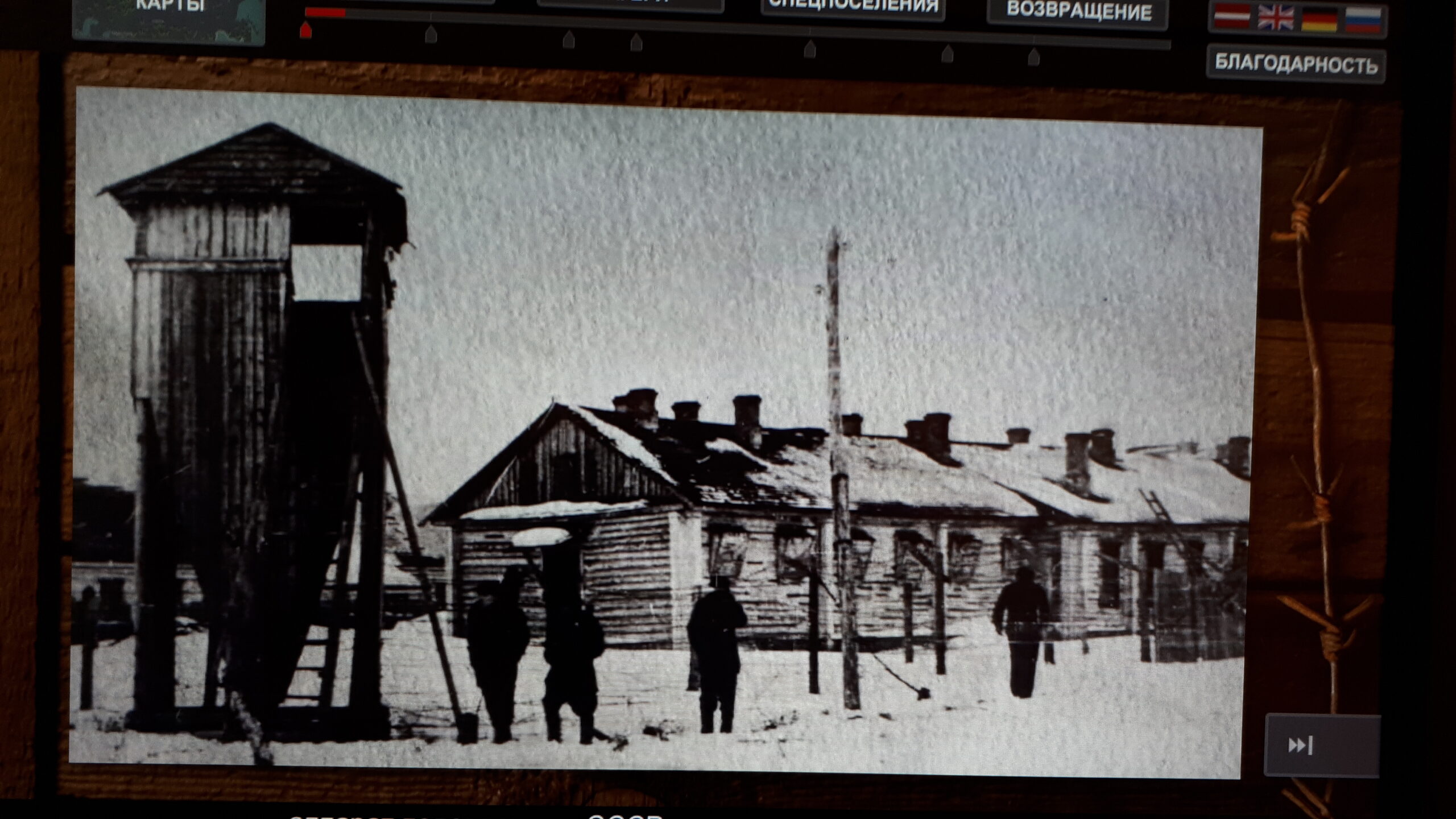
The Romanov dynasty ended in 1917, and, one would hope, so ended the barbarity of the Czar’s prison system. Alas, the Soviet Bolsheviks proved themselves adept at learning the cruel methods of the Czars and became even more depraved than their predecessors. The Cheka, Lenin’s secret police, used terror to quell the longing for freedom that was in the hearts of the Russian people during the Russian Revolution and Civil War. Lenin kept the people in line; he had no intention of ever giving the people freedom or democracy. And after Lenin died in 1924, Stalin kept the prisons full and even expanded the system to become the Gulags- prisons and prison camps. Stalin used slave labor to build his ‘socialist paradise’.
The secret police used the darkness of night to make their arrests from their black sedans, fittingly dubbed ‘Black Marias’. The police became a dread terror, knocking on doors nightly throughout Russia. When the suspect opened the door, the police nabbed him and drove away with their ‘guilty suspect’ in handcuffs. He was imprisoned and never allowed to see his family or loved ones..
One of the most effective and insidious methods of extricating a prisoner’s confession was sleep deprivation. The prisoner would be kept awake for several days, then allowed to sleep for several hours before waking him up for interrogation again. Obviously, prisoners who suffered sleep deprivation suffered for the rest of their lives from enlarged hearts and all kinds of ailments. All of them died in middle age.
Conservative estimates of deaths in the Soviet gulags from starvation, the cold, and overwork show that at least 20 million Russians died in the camps, the vast majority of which never saw a fair trial. They were tortured, they confessed, and they were sent to a gulag.
The Soviets boasted that the city of Magnitogorsk was a modern city built by up-to-date methods, but in reality the city was built by slaves, tens of thousands of whom died in the frozen tundra.
The stories of human suffering in the gulags go on and on. Alexander Solzhenitsyn’s The Gulag Archipelago is three volumes of the victims’ stories and each story is heartbreaking. Stalin inflicted his people with much terror; to learn more about what Stalin did in Russia during his reign as dictator, come study Animal Farm with us!
